
Gradient Groove – Music Recommendation System
This project explored users’ experiences and needs regarding intelligent recommendation systems in existing music applications, and proposed a new interaction model to better address users’ emotional needs.
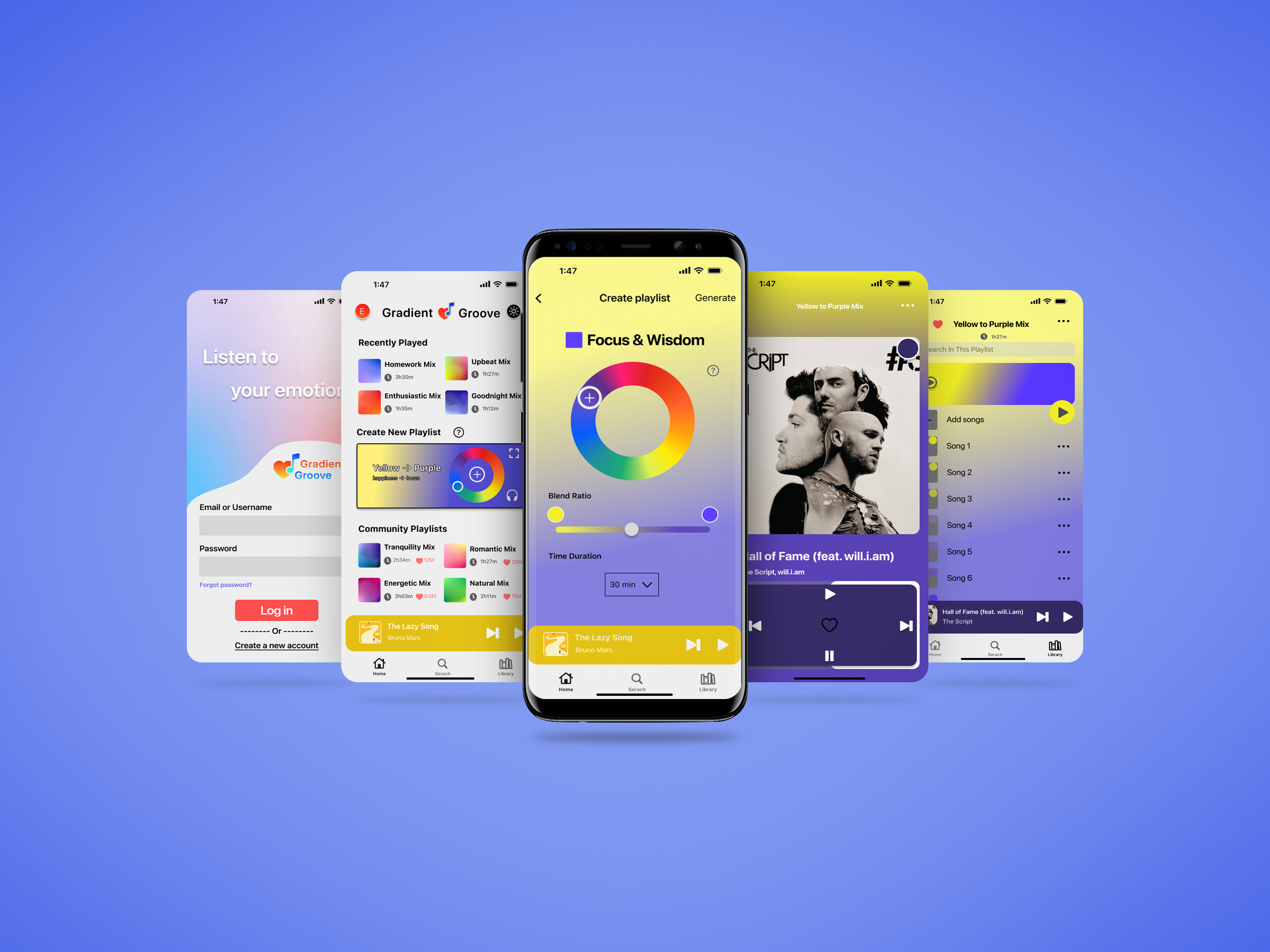
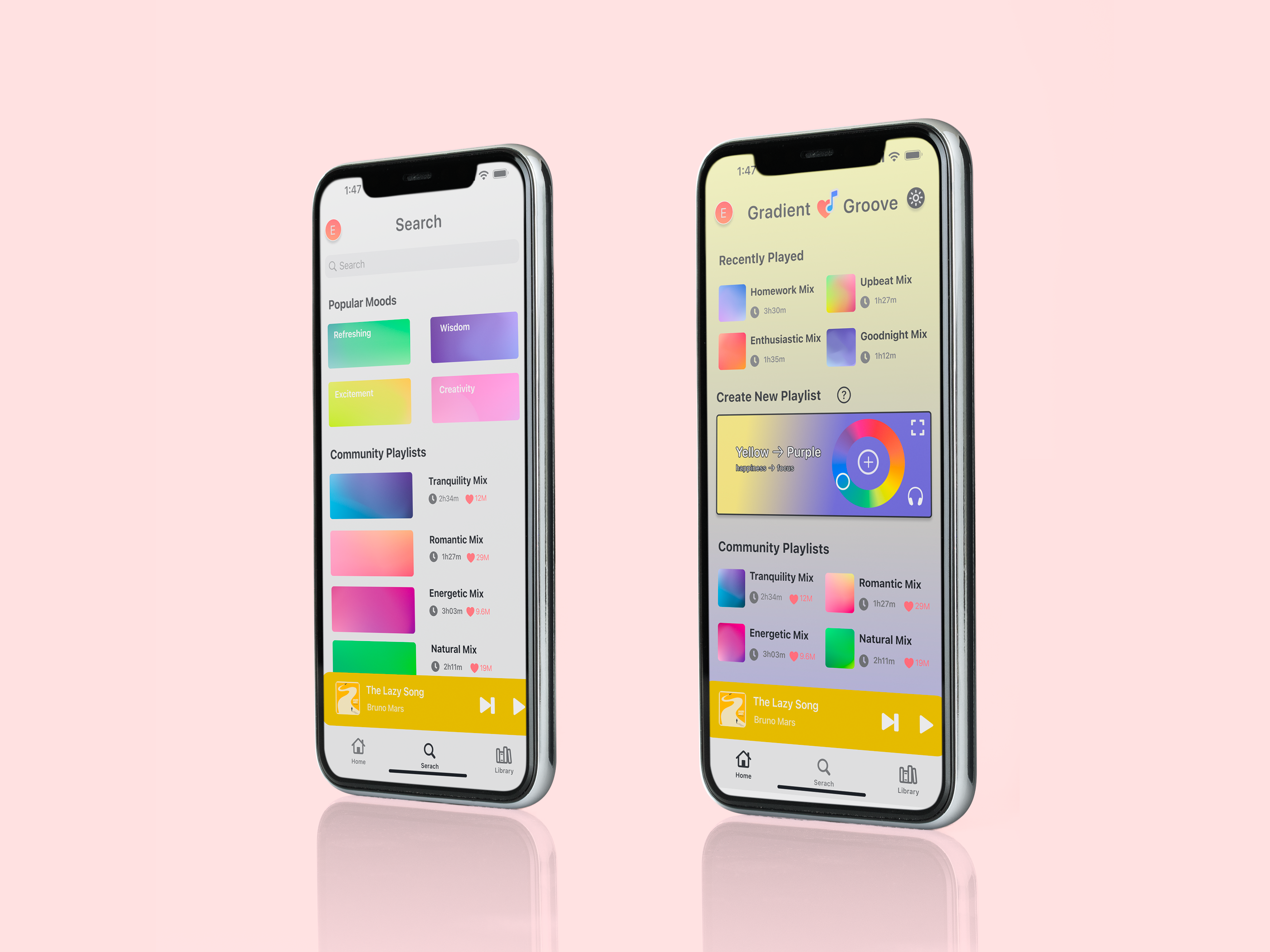
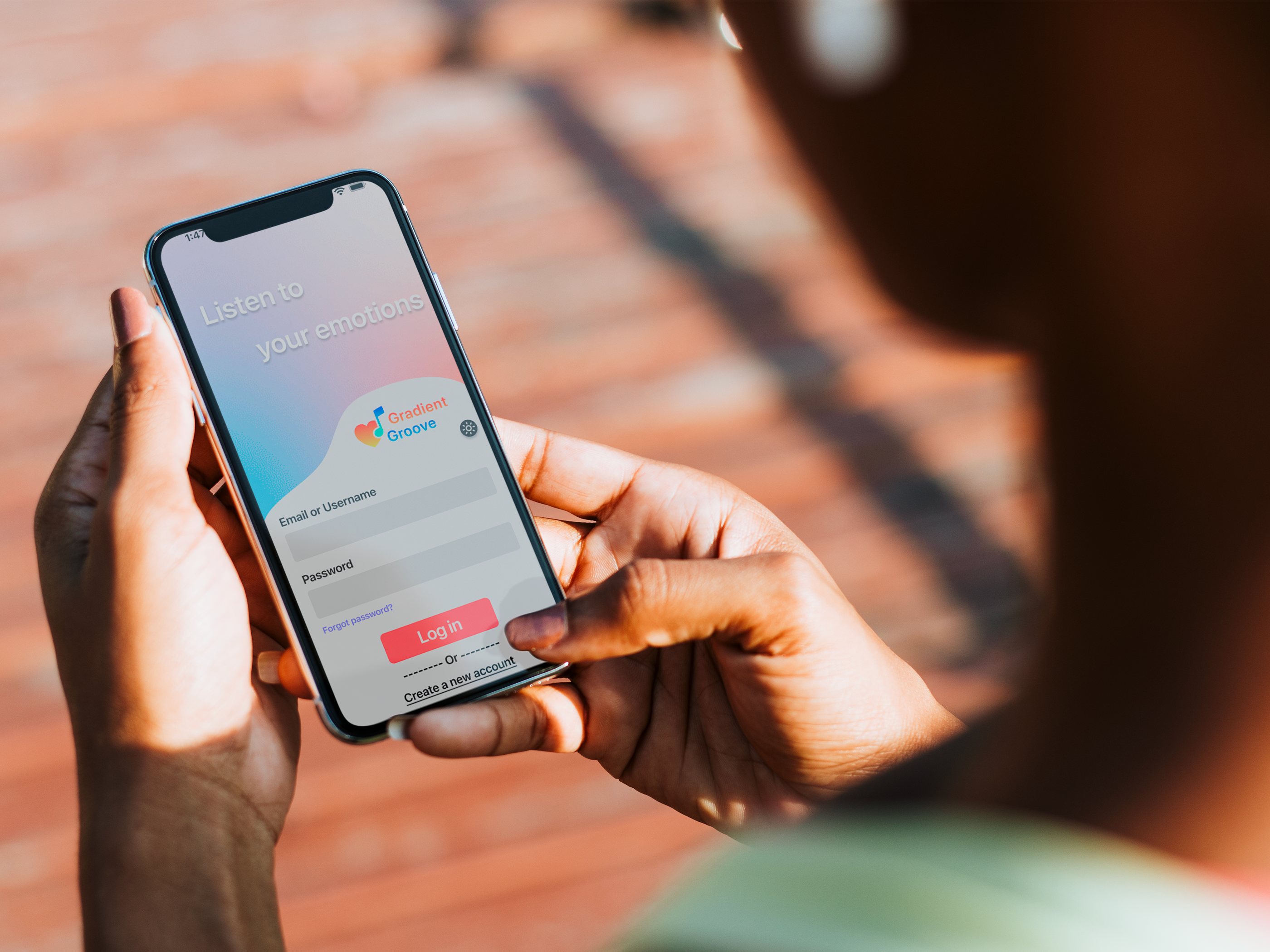
Project Overview
Goal
- Conducted user research to identify pain points in existing music recommendation systems on the market.
- Explored the connection between music, emotional value, and color.
- Designed an innovative interaction model.
Roles
- User Experience Research:
Studied user behavior and analyzed user feedback to extract key insights. - User Experience Design:
Created user personas and storyboards to define target users and guide product direction. - User Interface Design:
Conducted multiple iterations of product prototypes and refined the design through several rounds of user testing.
Research Questions
-
How can we understand the connection between music, human emotions, and color—and apply it in design?
-
How can music be used to help regulate emotions and relieve stress among today’s youth?
-
How can color psychology be used to visually represent emotions and connect them to corresponding music?
User Study
Research Methods
- Survey:
Conducted an online questionnaire to collect large-scale user experience data and build user profiles. - Interview:
Performed in-depth interviews to gain deeper insights into user experiences and uncover diverse user needs.
Common Music Platforms

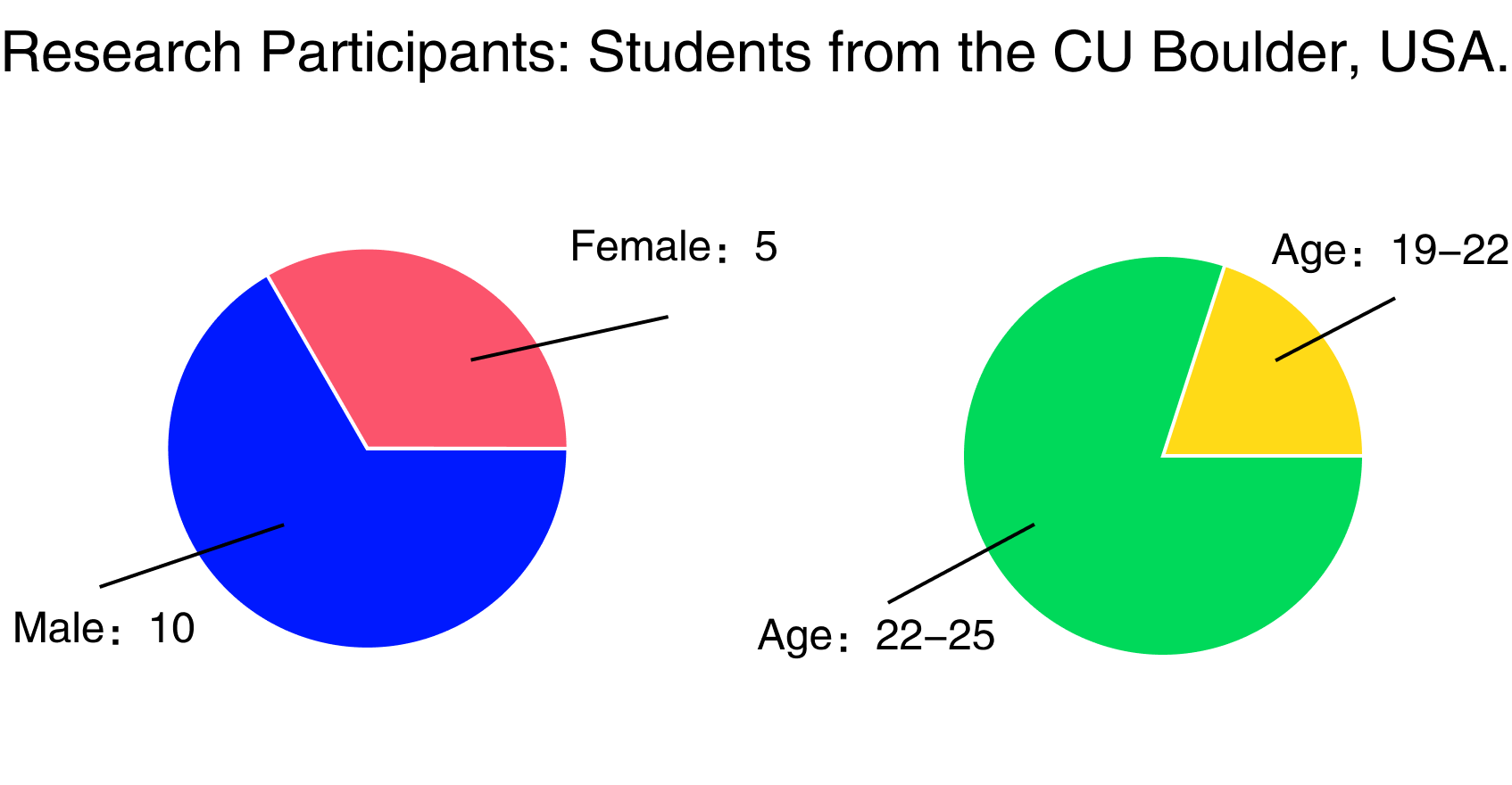
Subject Groups
Summary

User Personas

Allison
- Female
- Age: 24
- Newly Graduated
- Lives a comfortable yuppie lifestyle
- Boston, MA
- Easygoing, relaxed
Allison just graduated from college and thankfully found a job in her degree field. She had to move out of her hometown for her job but likes the thrill of living in a new city.
She listens to all types of things depending on her mood — music, podcasts, ebooks, whatever she’s feeling that day. The exception is she’ll always listen to high tempo songs in the gym. She likes her playlist, however she feels like she listens to the same playlist every time she works out. She’s tried Spotify music recommendations in the past, but feels like they mostly miss the mark. She’s also tried Apple Music, but more or less to the same end result.
Allison uses different apps for different purposes (she wouldn’t use Spotify for podcasts or ebooks), so she would like a super clean and simple UI to get her to where she wants more efficiently. Since music is always in the background and never in the foreground, she rarely pays attention to things like visualizers or album art. She’s not particularly looking for a new app, but if there’s a better option available she wouldn’t mind switching.

Thomas
- Male
- Age: 22
- College Student
- Aurora,CO
- Introverted, emotional
- Heavy Spotify user
Thomas is a senior student at CU Boulder. He listens to music all the time – walking to campus, doing homeworks, exercising etc. He always needs music to help him stay in concentration and change his moods.
Thomas uses Spotify since that’s the only app he will pay a subscription for. He mostly enjoys the app, however, sometimes he feels the recommendation system always push songs that are jarringly different. That’s a main reason he is afraid of using auto-generated playlists. He has different playlists set for different mood settings. And he has a playlist that have similar album cover colors for aesthetic.
Thomas wants a better organized (or customizable) homepage, and he simply wants better recommendation system that won’t stream songs completely out of left field.
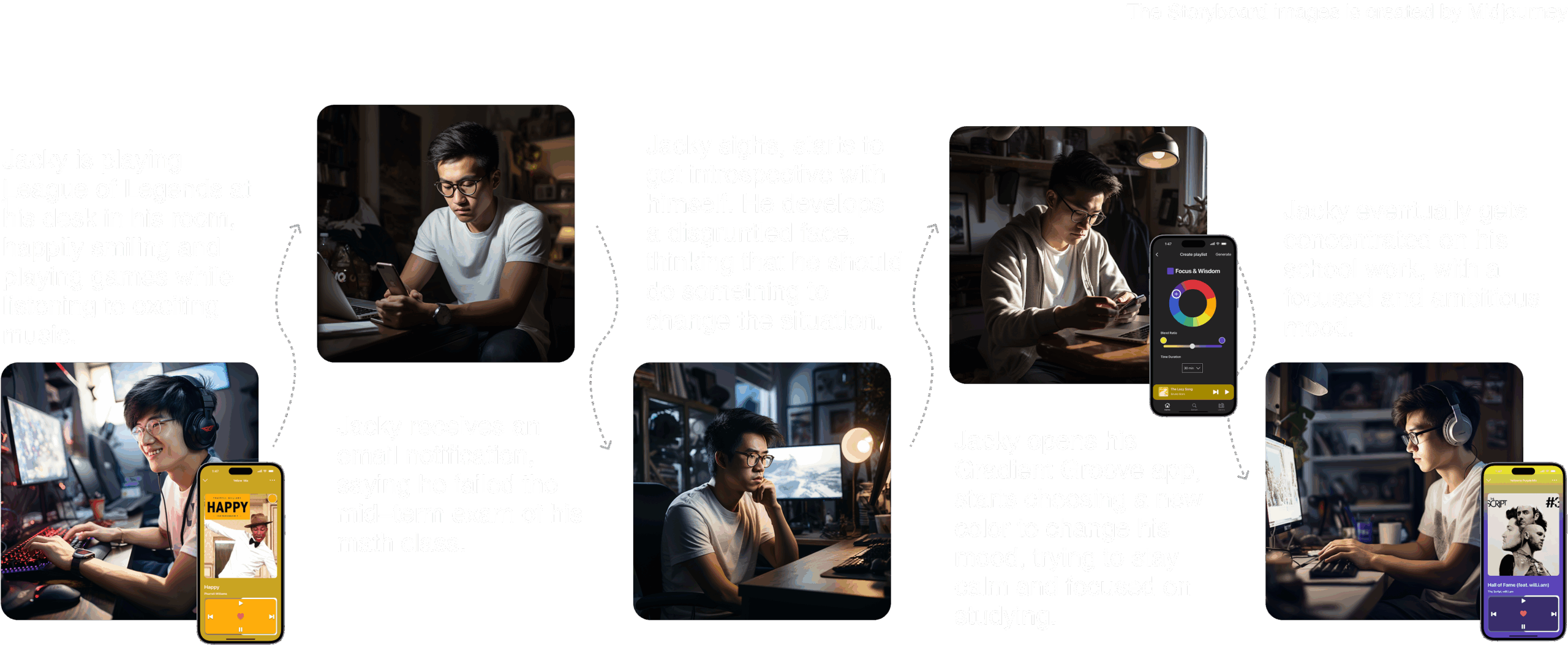
Story Board
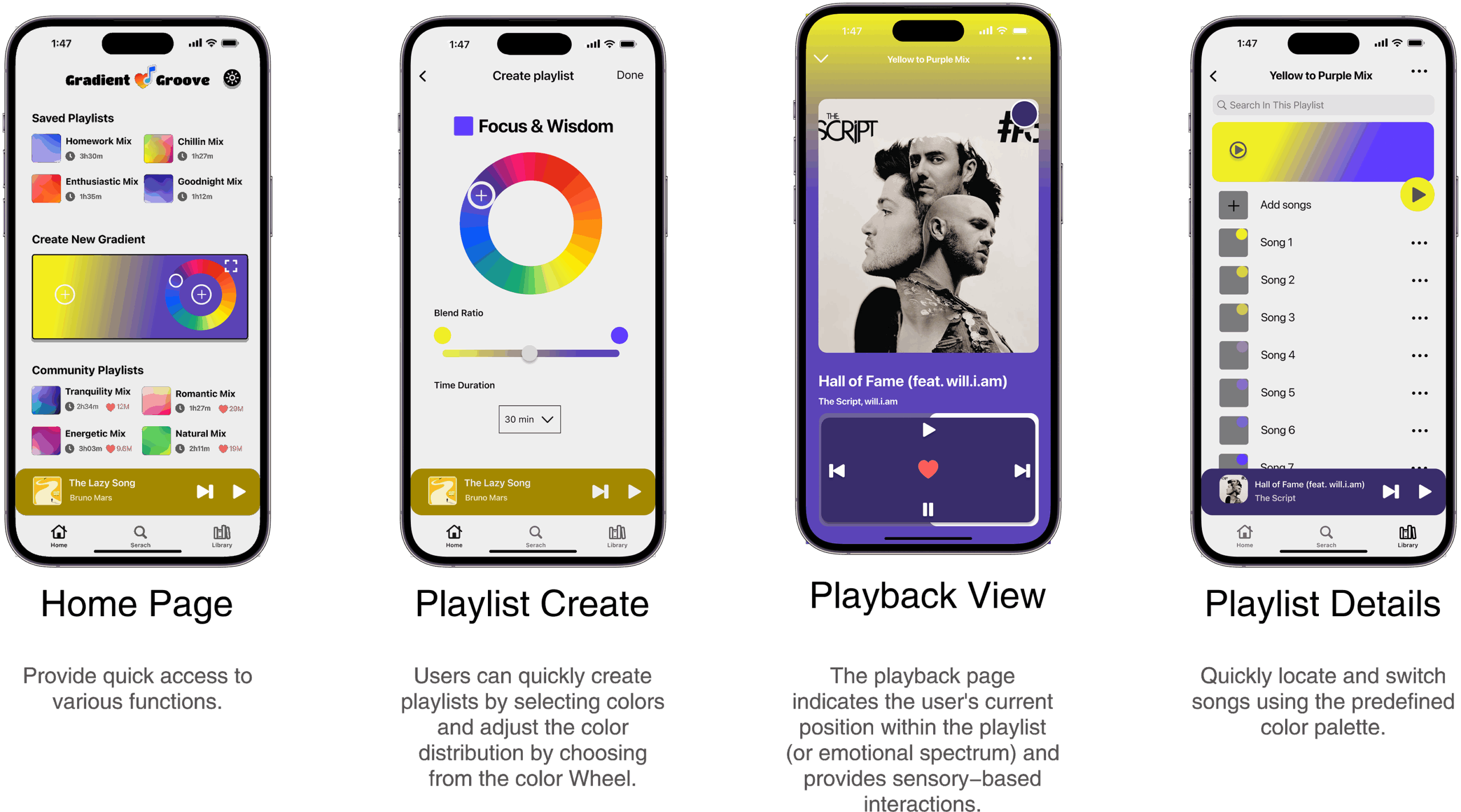
Prototype
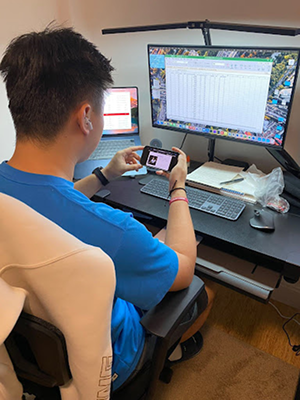
User Testing
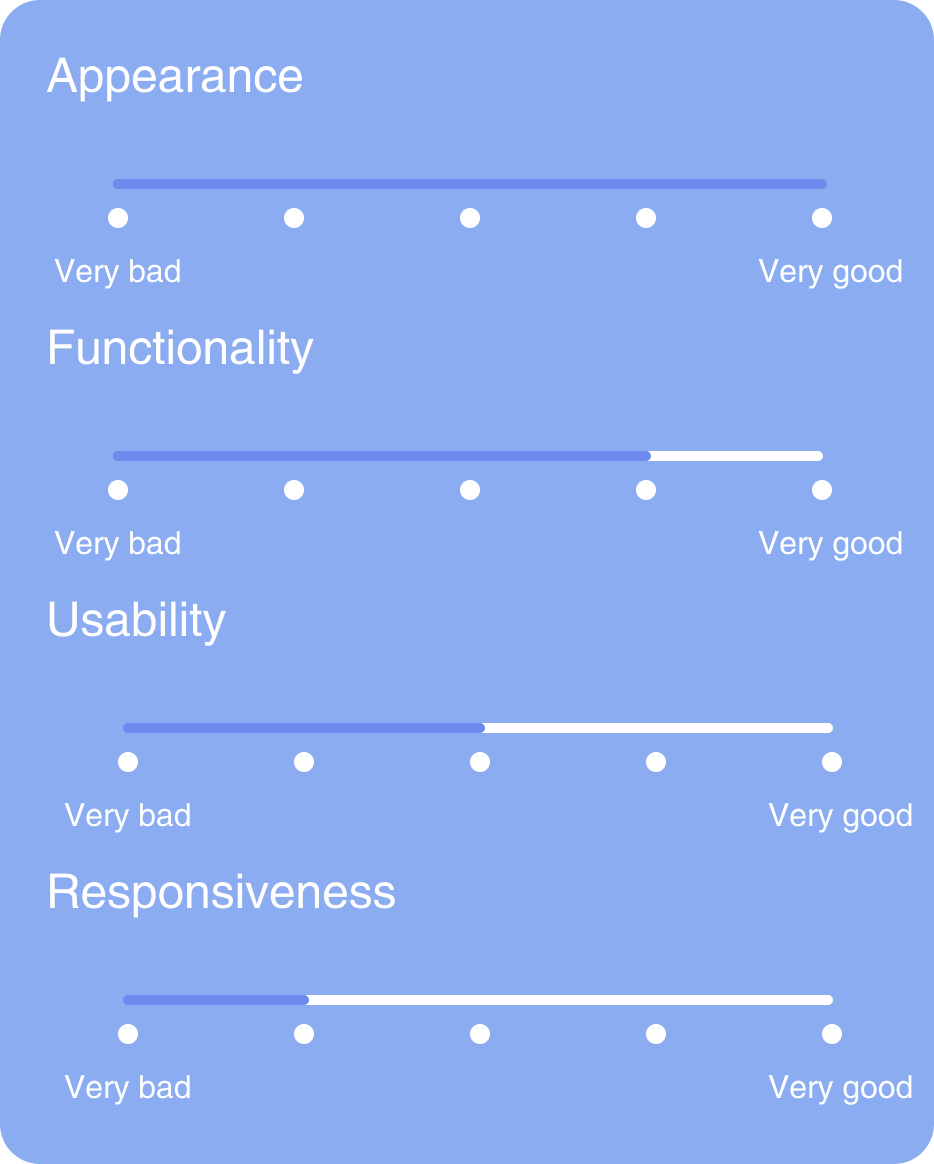
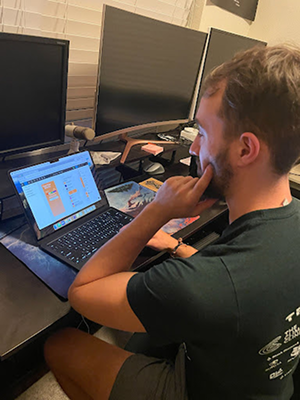
User Feedback Summary:
-
Positive comments on the UI and feature design.
-
Users found the system easy to understand.
-
Some noted that transitions could be smoother.
-
Minor interaction issues were reported.
Suggestions:
Enhance interactivity, add more pages, and improve transitions.
User Feedback Summary:
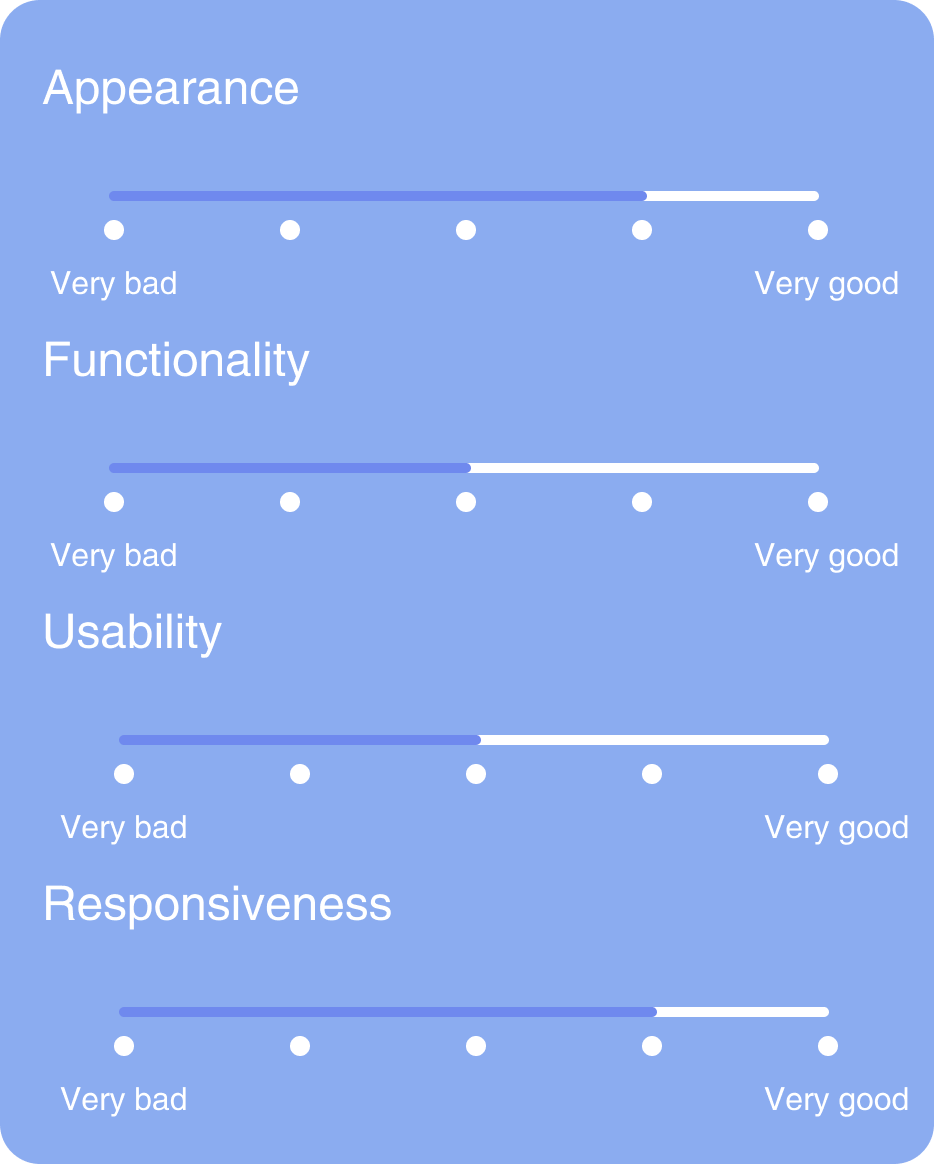
-
Really liked the minimalist UI.
-
Fun to use while still consistent with the interaction patterns of other music apps.
-
Didn’t understand the innovative features at first.
Suggestions:
Add prompts and tutorials to improve user error tolerance and enhance usability.
Iterations
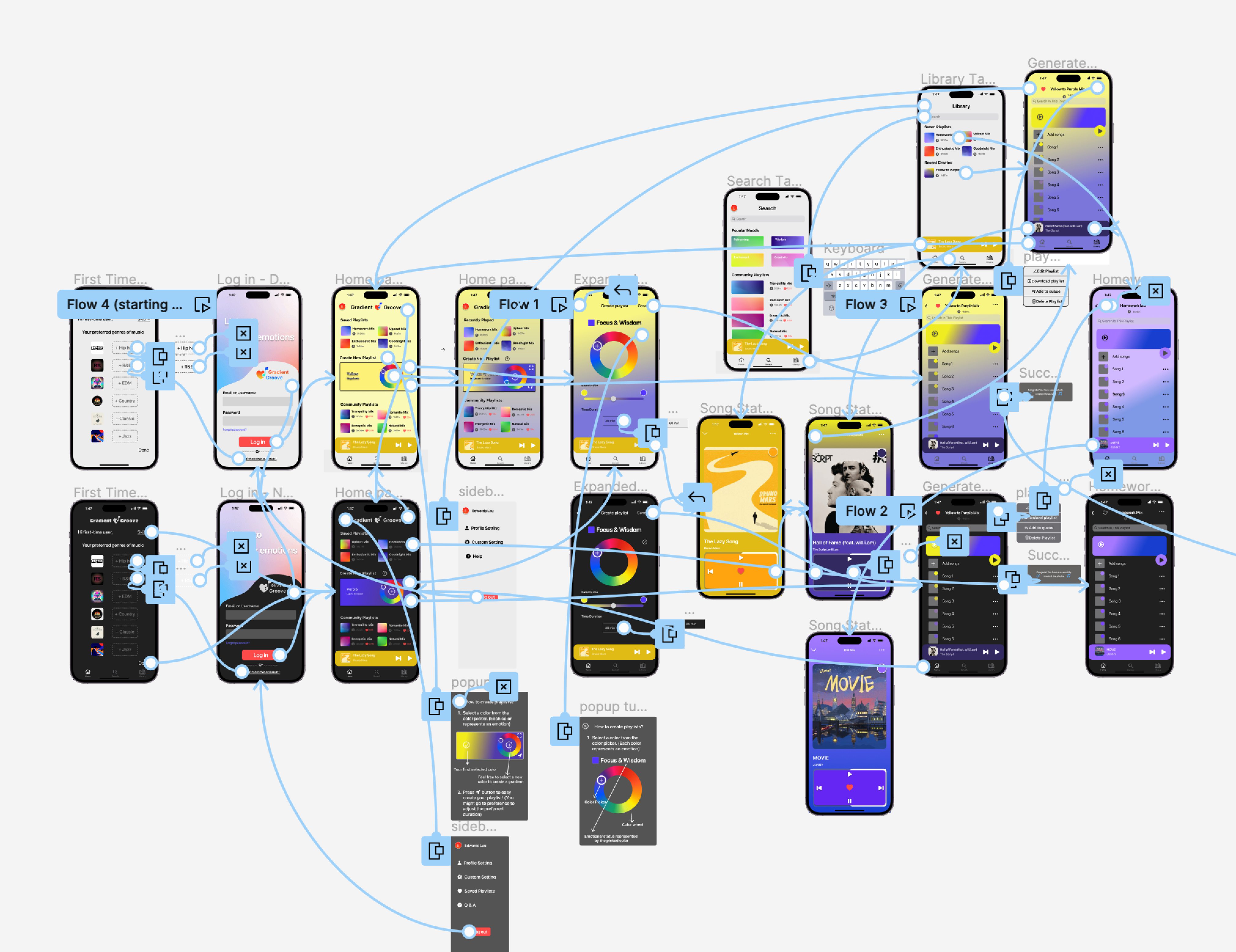
Additional interaction cues were added to the initial prototype to help users better understand the system in a clear and straightforward way. While enhancing the user experience, these improvements also enable faster and more efficient interactions.