
Portable Basketball Coach – Smart Wearable Design
This project provides a low-cost shooting training solution for beginner basketball players. User experience was tracked and analyzed during use, and the smart wearable device was developed through embedded system design.
Project Overview
Goal:
- Investigated the skill needs of beginner basketball players.
- Collaborated with professional basketball athletes to support the development process.
- Independently designed and built the device.
Roles:
-
User Experience Research:
Conducted longitudinal studies on target users to understand real-world usage experiences and analyzed the collected data. -
Product Design:
Identified user needs, developed product concepts, and planned the design and manufacturing workflow. -
Embedded System Design:
Handled everything from circuit design to software development, including debugging and optimizing the smart device.
User Study
Research Questions:
-
Do you feel helpless when your solo basketball shooting practice shows no improvement?
-
Do you feel that your shooting form is not standard enough, resulting in a low shooting percentage?
-
Do you feel the need for an assistive device to improve your shooting performance?
Subjects:
5 participants, including four males and one female from gyms in the Boulder, Colorado area. All participants were beginner-level basketball players.
Method:
User information was collected through short interviews, each lasting approximately five minutes.
Professional Support
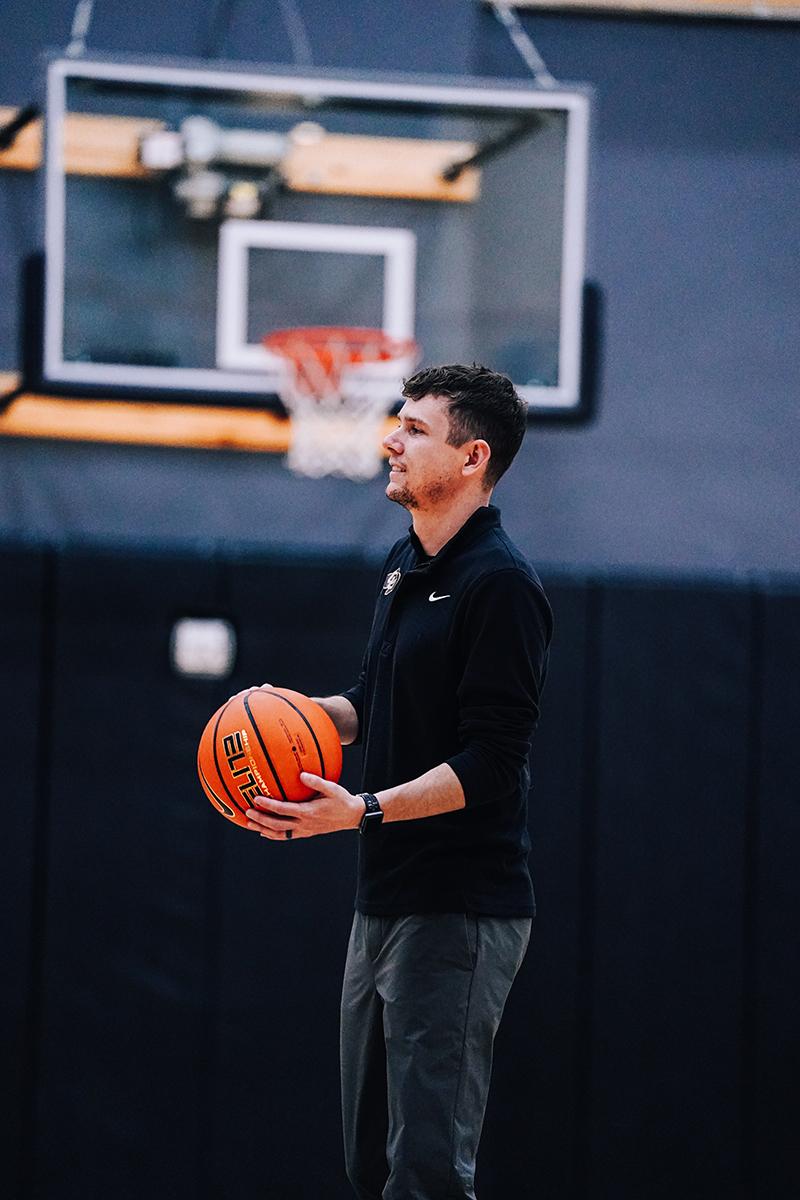
Matt Hower
Assistant Coach, the University of Colorado Boulder Women’s Basketball Team
Interview Format:
30-minute semi-structured interview
Objective:
To gather expert insights on fundamental basketball shooting techniques and training methods for beginners.
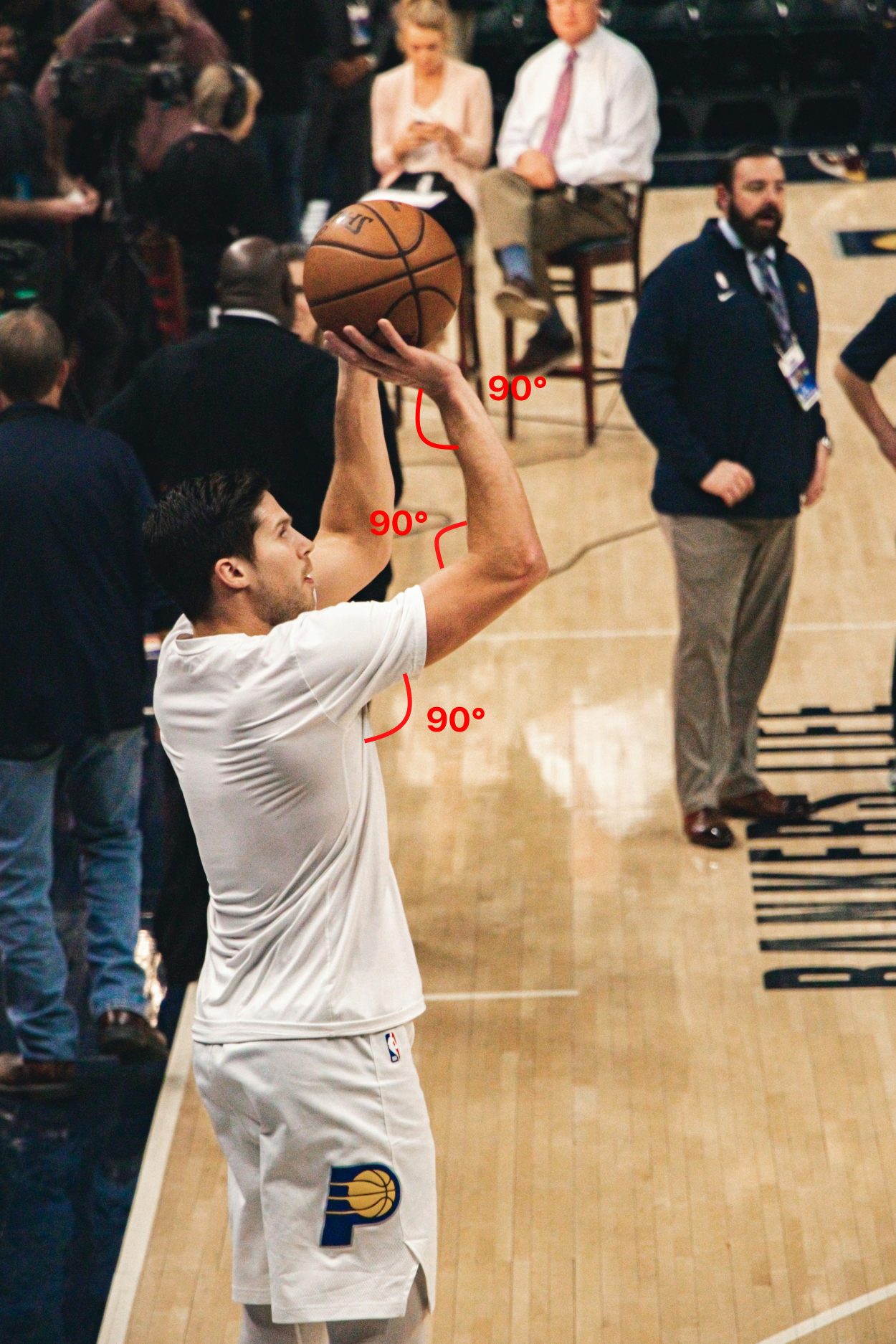
Q1: What are the most important factors in shooting a basketball?
The coach emphasized the importance of proper body alignment: the shoulder, elbow, and wrist should form a near right angle. Players should maintain eye contact with the rim, slightly bend their knees, lower their center of gravity, and step one foot slightly forward for balance. For shooting, a release angle of around 45 degrees is recommended, along with mastery over arm motion and shooting force to ensure accuracy.
Q2: How can shooting consistency be maintained?
According to the coach, correct shooting posture and release mechanics are essential to building both accuracy and stability. Professional athletes maintain consistency through high-volume, repetitive practice, reinforcing muscle memory. For beginners, the coach recommended standardized form training from the outset, emphasizing that building good habits early on is critical for long-term improvement.
Product Design
Design Concept
-
Integrate smart wearable technology with everyday basketball training
The device is designed to seamlessly support beginners during regular shooting practice sessions. -
Lightweight and independently powered
A compact, battery-powered design ensures portability and ease of use without external dependencies. -
Simplified component structure to reduce failure rates
The internal architecture is intentionally minimal to enhance durability and minimize potential hardware issues. -
Real-time data transmission and feedback
The device collects and transmits performance data in real time, providing users with actionable insights through interactive feedback and analysis.
Design Highlights
-
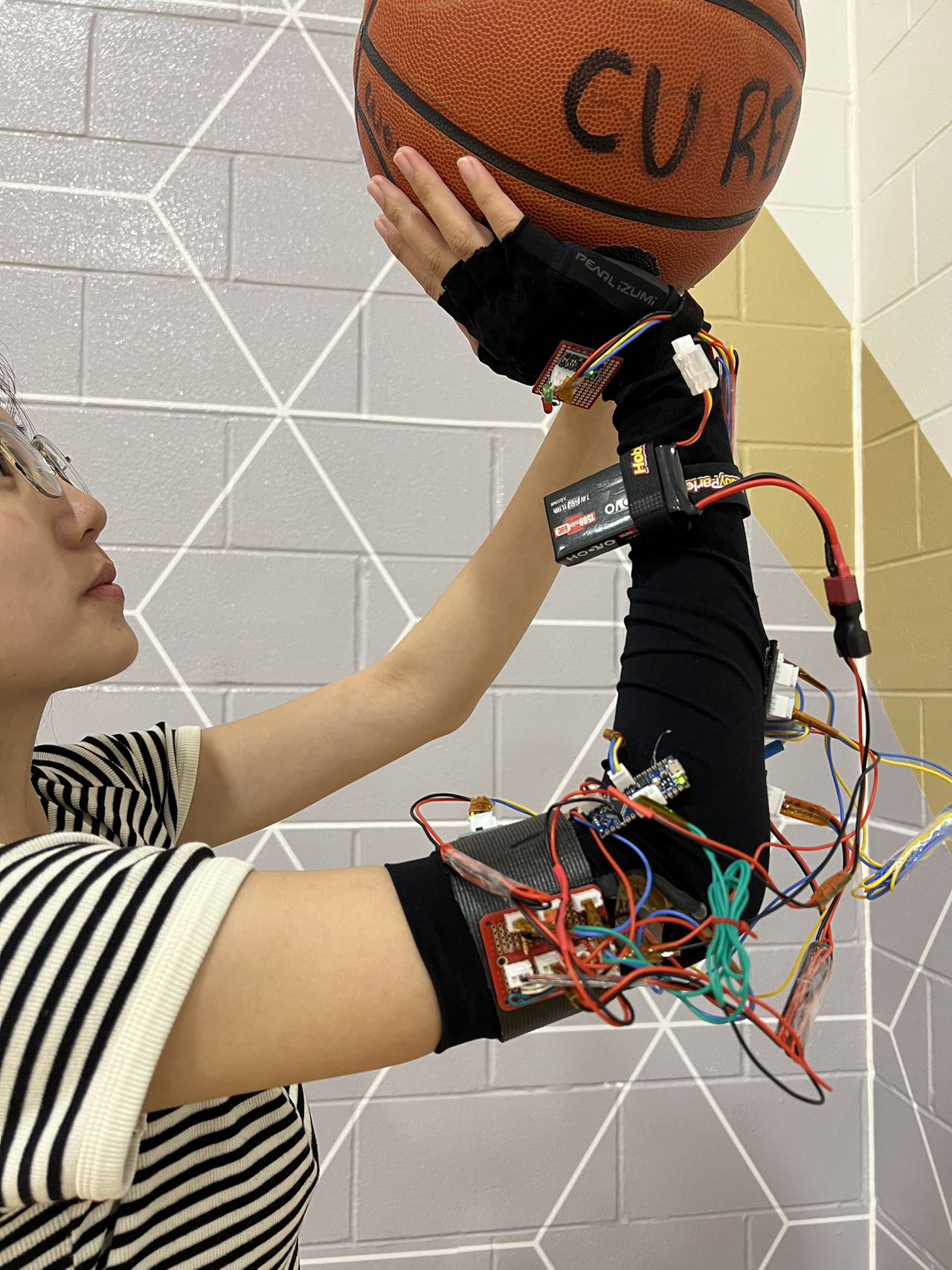
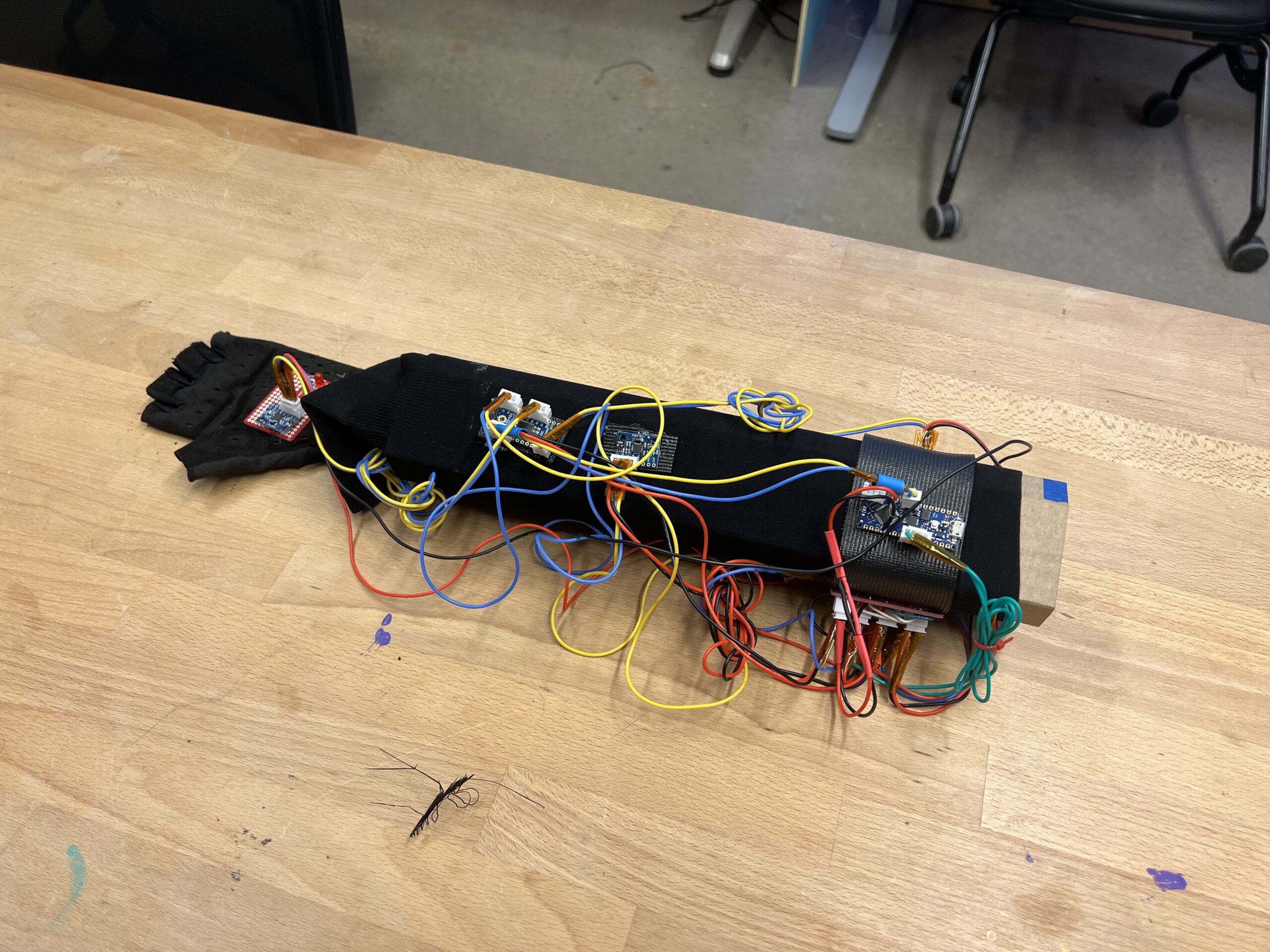
Component integration into a basketball shooting sleeve
The wearable system is embedded within a basketball arm sleeve, ensuring comfort and natural movement during training. -
Posture detection using MEMS and IMU sensors
A combination of Micro-Electro-Mechanical Systems (MEMS) and Inertial Measurement Units (IMUs) is used to detect and analyze shooting form. -
Data processing via Arduino microcontroller
An Arduino development board is employed for data collection, computation, and real-time analysis of shooting mechanics. -
Real-time feedback through vibration motor
A vibration motor provides immediate haptic feedback to guide users during training and correct improper shooting techniques.
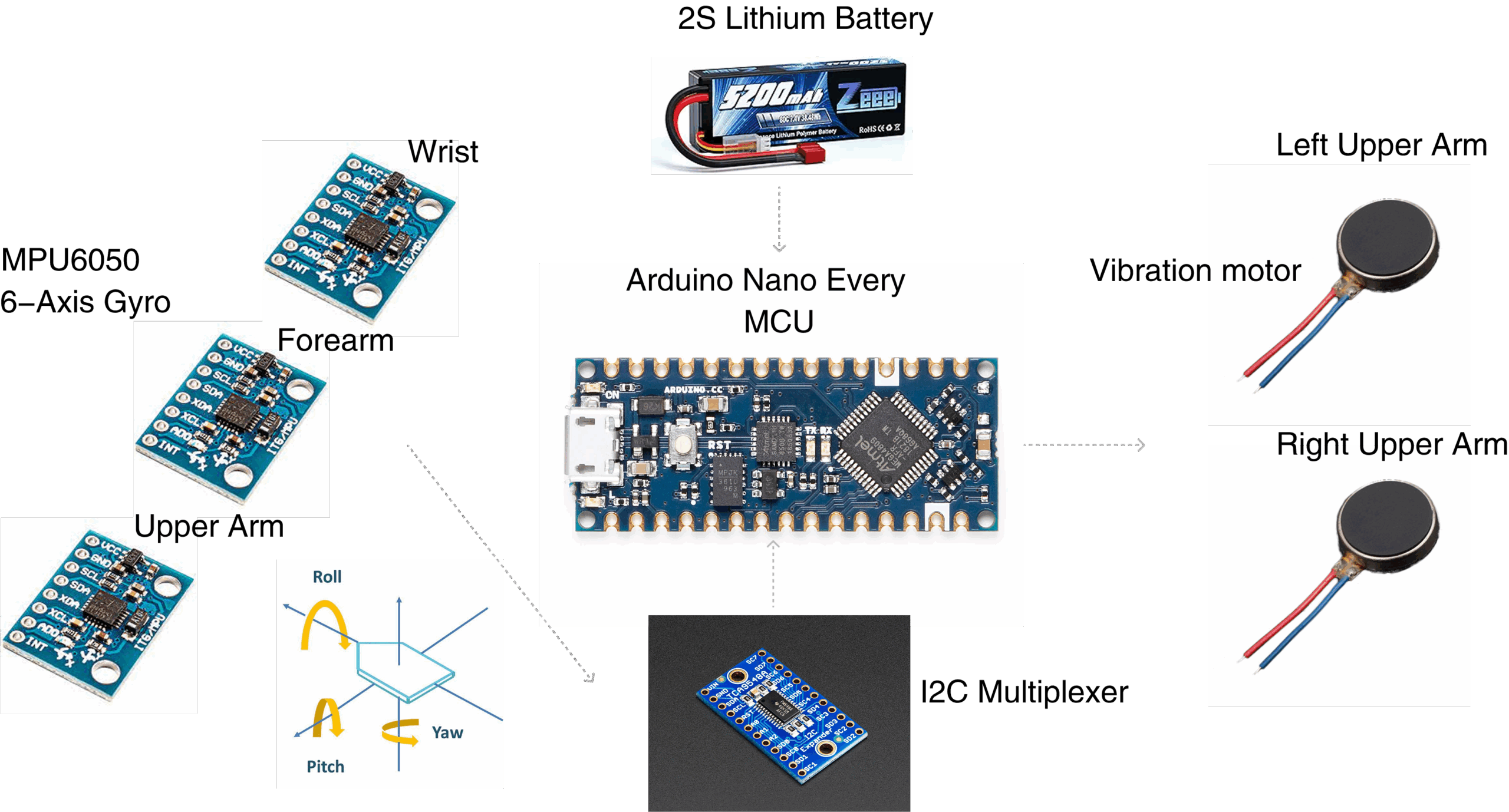
Embedded System
Design Details
I2C Communication Protocol:
- Saves GPIO pins and offers fast data transmission.
6-Axis Gyroscope:
- Utilizes the built-in DMP (Digital Motion Processor) library of the six-axis gyroscope to calculate Euler angles. By comparing the relative angles from three sensors, the system determines whether the user has entered a shooting posture. Once a shooting posture is detected, the system evaluates whether it meets the defined standard.
Vibration Motor:
- Provides real-time haptic feedback to prompt users to adjust their shooting posture.
User Testing
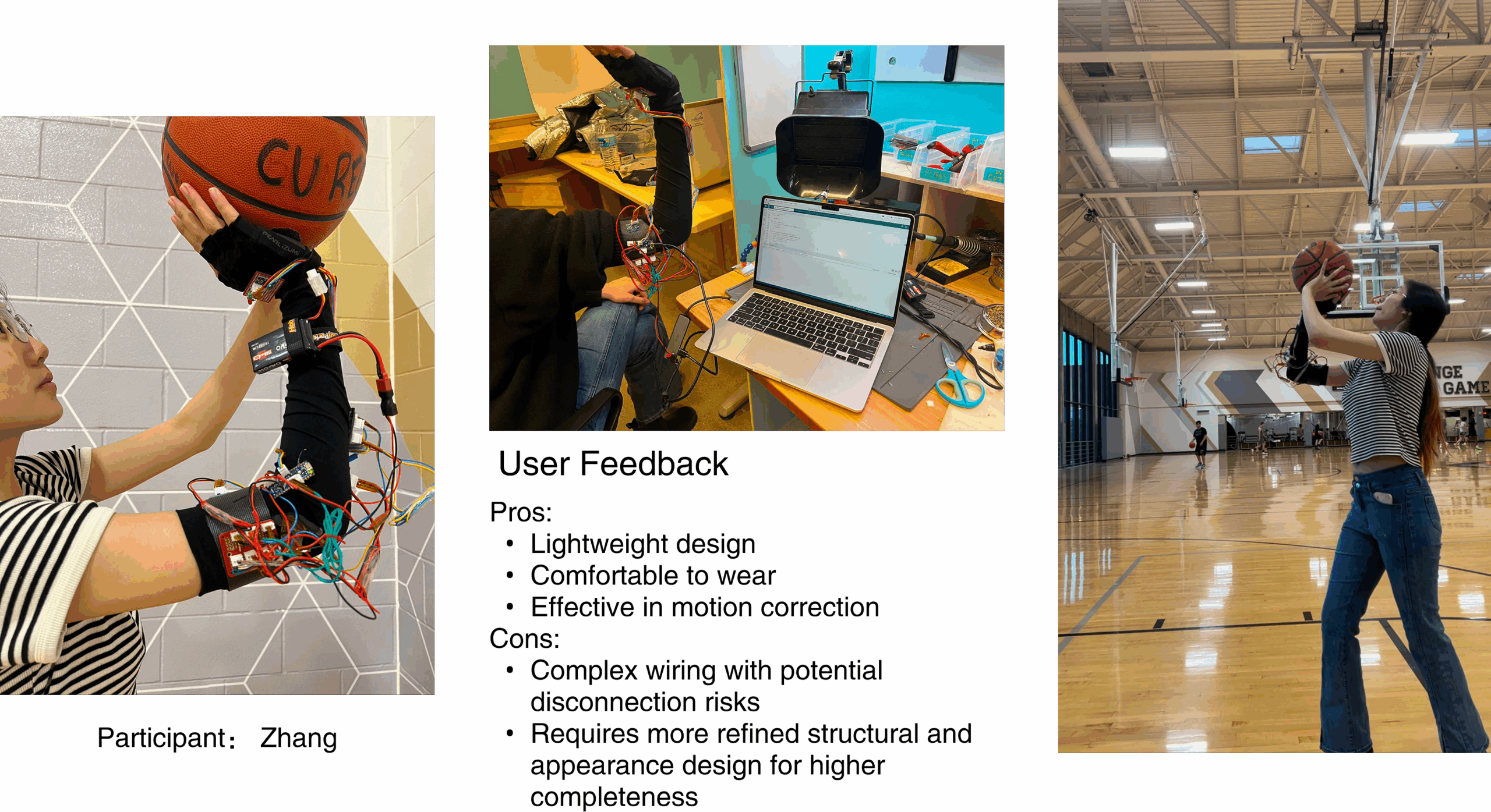
Iteration Plan
Appearance:
- Optimized components for better comfort and wearability during training sessions.
Hardware:
- Reduced the number of gyroscopes by switching to more highly integrated sensors, allowing for the collection of more detailed user training data.
Software:
- Introduced more rigorous detection conditions to provide users with enhanced motion assistance features.
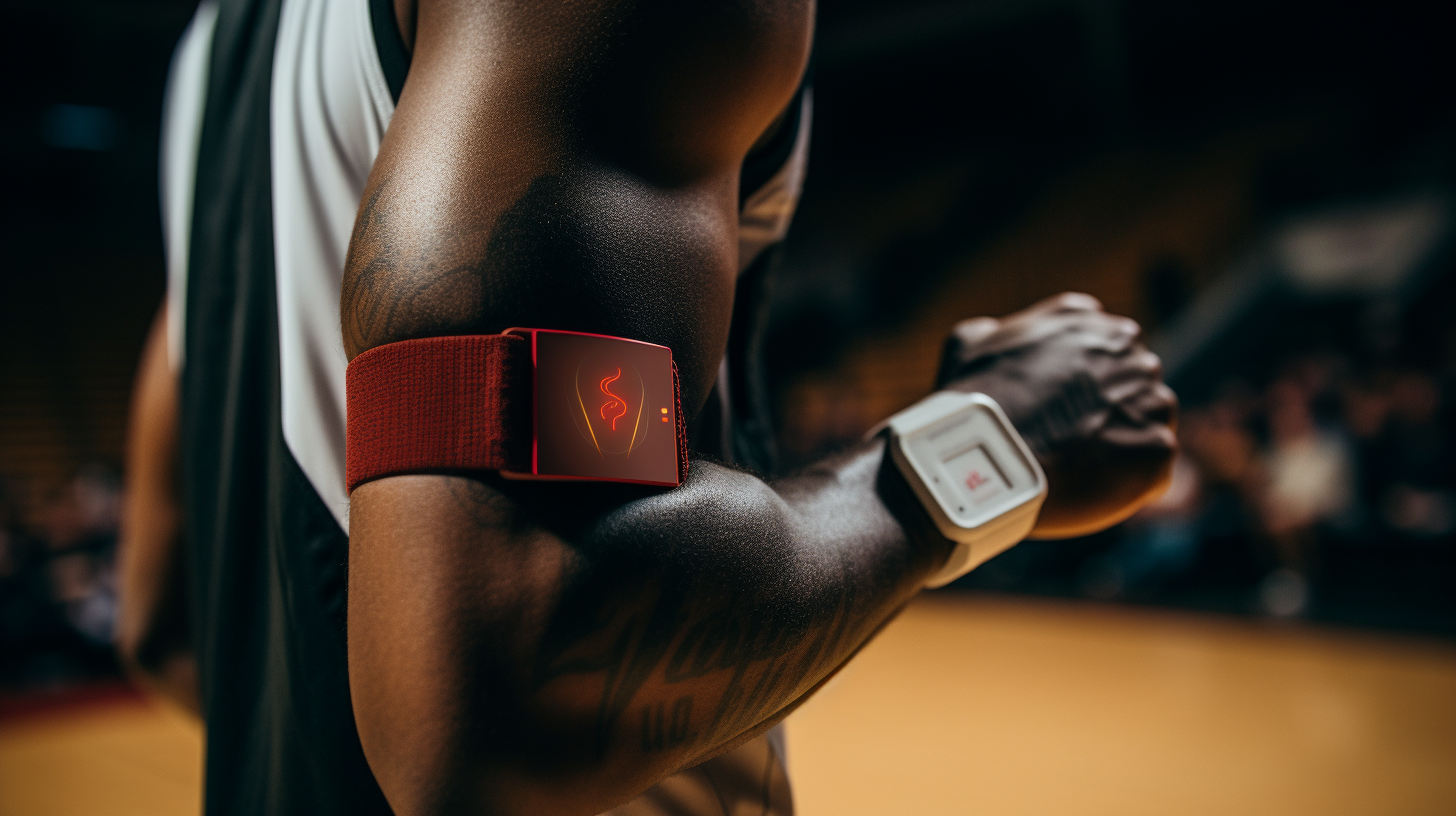
The image is created by Midjourney